Nanao's childhood trauma
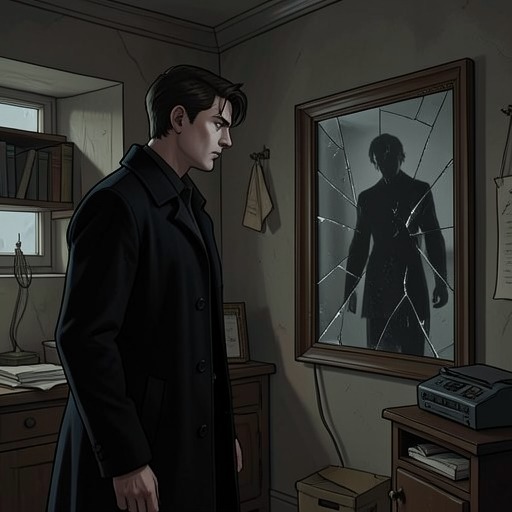
Bullet TrainNanao’s childhood trauma is rooted in a kidnapping he survived at eight, but survival did not close the story: he escaped alone while another captive boy remained behind. Nanao remembers the escape as the beginning of his confidence in his own ability to act, yet the other child’s fate is unknown, and Nanao’s failure to help him has endured as a personal trauma. In adulthood, the memory resurfaces unexpectedly, bringing the unresolved choice back into view.
The kidnapping and escape
As a child, Nanao was held with an unfamiliar boy in what he later describes as a place where kidnapped children were kept. He does not know the other boy’s name or what became of him. The captors’ carelessness, Nanao’s own energy and determination, and the timing of a lowered railway crossing arm and a passing bus made escape possible. The recollection preserves both the practical circumstances and the uncertainty of the flight: Nanao felt relief as the bus pulled away, then worried that he had no money for the fare. He escaped nonetheless, on his own, at eight years old.
The difference between the two children gives the escape its lasting emotional weight. The other boy realized that Nanao was going to try to get away and asked him for help. Nanao left without him. When asked later why, Nanao cannot offer a reason: he does not remember weighing the choice and allows that it may have been instinctive. The account therefore does not present his escape as a considered decision to abandon the boy, but neither does it erase the fact that he did. His uncertainty about his own action is part of what makes the memory difficult to settle.
What remained unresolved
Nanao never learned the captive boy’s identity or fate. He calls the boy his personal trauma and says he does not want to think about him. The unknown outcome leaves the memory without an answer or a confirming account from anyone else: Nanao knows only that the boy was there, asked for help, and did not escape with him. The book supplies no further explanation of what happened to the child, so the gap remains part of Nanao’s experience rather than a mystery resolved for the reader.
The kidnappers were never caught. Nanao says his father did not report the kidnapping to the police, judging that doing so would cause more trouble than it was worth. Nanao says he did not particularly care at the time; he was proud that he had escaped. He connects the episode to a discovery about himself: he could do things for himself. That sense of agency coexists with the unresolved memory of the boy he left behind. The escape is thus both a formative success and the origin of a burden Nanao cannot explain away.
The memory’s return
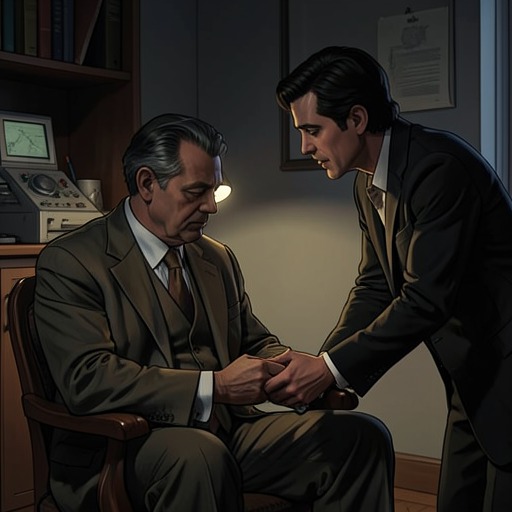
In adulthood, Nanao’s account emerges in conversation with a man in a suit. He first speaks about his father’s inability to save him: Nanao understood that wanting to rescue a child did not mean having the means to do so, and concluded that he would have to save himself. As he tells the story, the narrative renders memory as cabinet compartments swinging open and shut. The images of the escape feel immediate despite belonging to childhood; before Nanao can stop himself, another remembered scene appears, this time the other boy pleading for help.
The movement from escape to the boy’s plea is a significant change in the recollection. Nanao begins with the story of how he got away and what that taught him, but the memory opens onto the part he would rather leave closed. He describes the episode as trauma, a word Maria had teased him with, and says he would lock the cabinet of memory if he could. His account does not resolve why he failed to help or reveal the boy’s fate. Instead, the act of telling makes the absence and uncertainty explicit. Nanao even wonders why he has been talking so much, as if the story has surfaced before he chose to tell it.
Agency and helplessness
Elsewhere, Kimura recalls learning about helplessness from a former job guarding a kidnapped man. A fellow guard explains an experiment in which a dog, after being subjected to unavoidable shocks, stops trying to escape even when escape later becomes possible. Kimura applies the idea to students living under the Prince’s rule: repeated suffering and electric shocks have taught them to believe that resistance is futile. Their fear turns them against one another and makes collective opposition harder.
That account offers a thematic contrast, not an explanation given for Nanao’s behavior. Nanao did act to escape, and he remembers that action as evidence of self-reliance; the evidence does not say that the students’ experience or Kimura’s theory caused his childhood trauma. The parallel instead brings two consequences of captivity into focus: powerlessness can extinguish attempts to act, while successful escape can still leave behind a choice whose meaning remains painful and uncertain. Nanao got himself out, but the boy’s unanswered plea stayed with him.